
Our product rankings are based on analysis of thousands of customer reviews, brand reputation, pricing trends, and popularity data. They represent our honest opinion and are intended as a helpful starting point for your research. Some links on this site are affiliate links — if you buy through them, we may earn a small commission at no extra cost to you. This helps us keep the site free and up to date.
Free standing wood fired pizza ovens sit on their own frame, stand or base, so you can cook over real logs in the garden without building an outdoor kitchen around them. They suit anyone who wants a permanent feature on the patio rather than a small oven to carry to the campsite.
This range runs from wheeled steel carts to heavy brick domes, and how each one is supported varies a lot, so check that before you buy. If you'd rather have something you can lift, see our portable pizza ovens. For high-end models, browse luxury outdoor ovens.


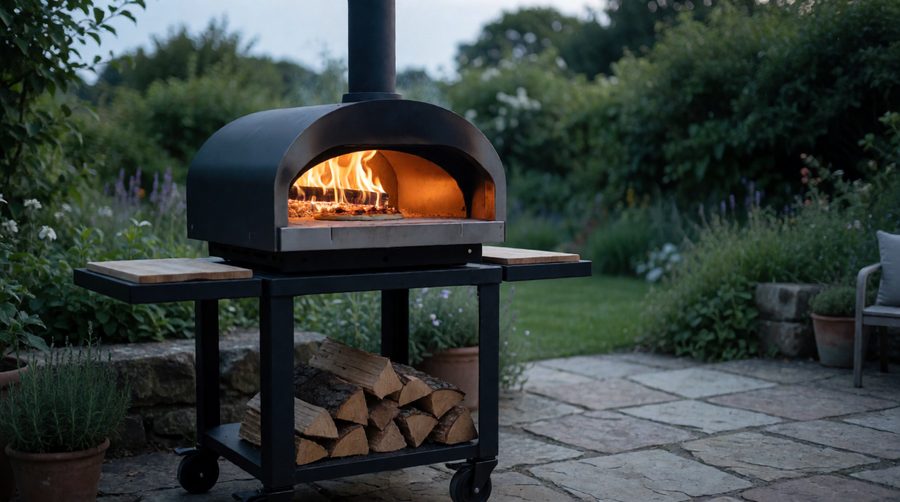
There's no official definition, and shops use the word loosely. Amazon listings say "freestanding" for almost anything that isn't fixed to a wall, including ovens that still need a table. Igneus lists its Classico as "Freestanding, Tabletop" because it works both ways. So look at what actually holds the oven up. You'll find three formats:
All three differ from a built-in pizza oven, which is bricked into an outdoor kitchen. A freestanding pizza oven needs no building work around it, although the heaviest models do need a proper plinth.
These all come from our range, using the figures on each listing, with maker's figures where we could check them in November 2026. Temperatures are the quoted maximum, not what you'd cook at.
| Oven | Support | Size (D x W x H) | Weight | Max temp | Capacity |
|---|---|---|---|---|---|
| Edostory Outdoor Oven | Cart, 2 wheels | 55 x 37 x 159cm | 24kg | 287°C | 12 x 12in stone |
| Igneus Classico | Table or optional stand | 68 x 66 x 103cm | 45kg | 500°C | Two 12in pizzas |
| Black Steel Freestanding | Cart, wheels | 62 x 125 x 184cm | 46kg | 600°C | Not listed |
| Morsø Forno | Solid surface or table | 68 x 75 x 61cm | 103kg | 500°C | Not listed |
| Vitcas Casa | Plinth | 55 x 67 x 52cm | 254kg | 500°C | 1-2 pizzas |
| Vitcas 300kg Brick Oven | Plinth | Inside 84 x 59 x 40cm | 300kg | Not listed | 1-2 pizzas |
| Vitcas Brick Oven L | Plinth | 132 x 100 x 49cm | 400kg | Not listed | 3-4 small pizzas |
| Vitcas Pompeii 140 | Plinth | 152 x 100 x 44cm | 450kg | Not listed | 6-7 pizzas |
The weights are the thing to notice. The heaviest pizza oven here is almost 19 times the weight of the lightest, and that decides where it can go and how it gets there. Brick models' heights exclude the chimney and whatever you build underneath.
Choose a cart if you want to start cooking soon after delivery and wheel it out of the way afterwards. The Black Steel Freestanding pizza oven is a complete cooking station, with prep space either side. Its 600°C is a listing claim we couldn't check against a maker's data sheet, so treat it as a guide.
The Edostory is far easier to move at 24kg, but it isn't quick. At 287°C it behaves more like a very hot kitchen oven with a wood flavour than a restaurant pizza oven. That's fine for crisp family pizzas, less so for soft, authentic Neapolitan bases.
Specialist retailers also sell larger trolley models. The Fontana Margherita reaches 1,960mm tall with its stand and the Fontana Amalfi with trolley reaches 1,954mm, so measure under any pergola or overhanging tree. Fontana also makes a dual fuel pizza oven if you'd like a gas option.
This route gets you a well-made pizza oven without a building job. The Igneus Classico is the obvious example. Igneus uses 28mm firebricks and sells the frame and side shelf as extras, so budget for those if you have no strong table. With the bricks out it weighs just 20kg, so moving it is simple.
The Morsø Forno is a different animal: 103kg of cast iron from a Danish maker, with its Garden Outdoor Table listed alongside it. See it next to similar high-end models in our premium pizza oven range.
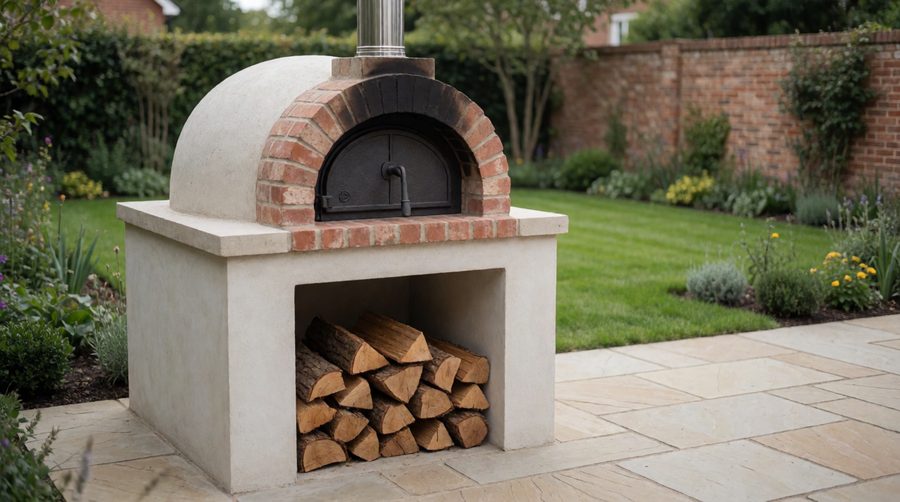
These are what most people picture as a traditional wood fired pizza oven. Thick refractory walls take longer to heat but hold that heat for hours. The listing for the Vitcas 300kg model says residual heat can still bake bread or roast vegetables the next day.
They take more work. The Pompeii 140 arrives in 11 sections to seal together, while the 300kg and L models come as kits with firebricks, mortar, insulation boards and a fibre blanket. The Casa's extra insulation is sold separately. All of them need a plinth you build first. Many owners pour a reinforced concrete slab on blockwork, but ask a builder to size it for the weight of your wood fired pizza oven.
If you'll be feeding a crowd, compare these with our extra large pizza ovens. For a business, go to our commercial pizza ovens instead.
A big exterior doesn't guarantee a big floor. The Hereford Pizza Oven Company oven has a 46cm chamber and recommends 8 inch pizzas, while the Classico fits two 12 inch pizzas on its 60 x 60cm floor. Many families find one pizza at a time is enough, and our 12 inch pizza ovens cover that size.
A Neapolitan pizza needs well over 400°C to bake in 60 to 90 seconds, so a pizza oven quoted below 400°C won't manage that style. Maximums don't tell the whole story either: the Classico is rated to 500°C, but its listing gives 350°C to 410°C as the cooking range. The stone floor matters as much as the air above it, so Igneus suggests an infrared thermometer.
Check the route through your garden. A 254kg pizza oven on a pallet won't go through a side gate or up steps without help, and even a 46kg cart may need two people to unpack. Measure the gate and plan where it'll be unloaded.
Most models in this range burn logs only, which gives you the flame and flavour but takes more attention. A gas pizza oven lights at a click. If you want both, dual fuel models such as the Gozney Dome burn wood or gas, and our multi fuel pizza ovens include several options. Fans of a smaller British-made pizza oven can also look at the DeliVita range.
Steel needs protecting from British weather. The Edostory and Black Steel models include covers, and it's worth buying one for anything else. Also think about storage: a lower rack keeps kindling close to hand and off wet ground.
London Fire Brigade's barbecue safety advice is a sensible guide for any pizza oven too:
A paved area is the usual home. Keep a wheeled cart on firm, flat paving and away from any slope.
Carts don't, as the frame does that job. Models like the Classico need a stand or a strong, heatproof table. Brick and refractory ovens need a purpose-built plinth, because 254-450kg would overload a timber table.
Yes. GOV.UK confirms you can use outdoor pizza ovens in smoke control areas, unless the appliance uses a chimney on the roof of a building such as a summerhouse. Smoke can still count as a statutory nuisance if it affects neighbours, as Solihull Council explains, so dry wood and considerate timing both help.
Use kiln dried hardwood logs cut to fit, and silver birch if you can get it, as Igneus recommends. In England, wood sold in volumes under 2 cubic metres must be certified Ready to Burn, meaning 20% moisture or less. Damp logs give more smoke and less heat.
Brick and cast iron handle it best, but all of them benefit from a fitted cover once cold. Move a steel cart under shelter if you can, keep the inside dry, and don't wrap up a pizza oven that's still warm.
A wood fired pizza oven gives real flame and a little smoke, and it's the more traditional way to cook. Gas is quicker and easier for midweek use, so try our mini gas pizza ovens or Ooni pizza ovens if convenience matters more to you.
